The Shape of Two Years

By: Janya Sindhu

Before Kellogg, I didn’t think two years was enough time to really know people—enough time to understand what kind of humor they default to, whether they’re the type to host dinner or show up two hours late to it, or what they become like when they’re stressed. I definitely didn’t think it was enough time for other people’s habits, phrases, and interests to quietly become part of your own life.
And yet, that’s exactly what happened.
Here, people become familiar to you quickly. Life here happens in high density. You see the same people in classrooms, club meetings, apartment dinners, lakefill walks, and conversations that somehow continue long after everyone said goodbye 15 minutes ago. Eventually, people stop feeling like polished introductions and start feeling real.
I think I understood this best while cooking for my quarterly dinners.
One of my imaginary dream lives involved becoming a chef. The kind of life where your apartment smells like garlic and butter, there’s music playing in the background, and you aggressively insist everyone try something while pretending you’re on The Bear.

At Kellogg, that version of me suddenly had people around it.
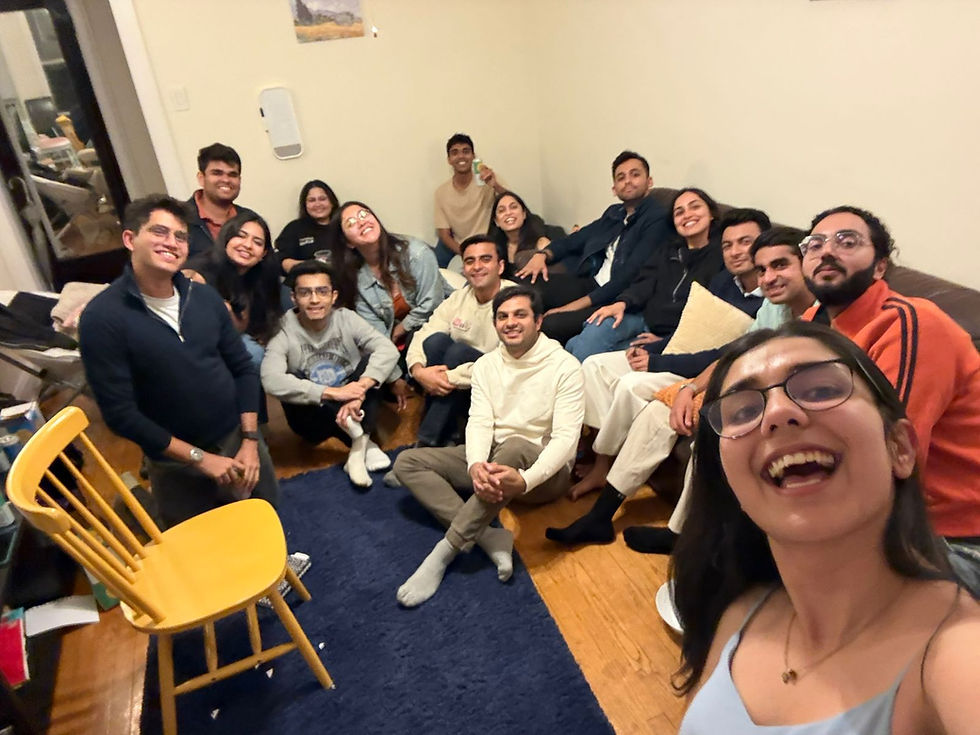
Not only were these people constantly trying to help me in the kitchen (please no), they were filling my living room with laughter, conversations, and the kind of memories that only become meaningful in retrospect. Somewhere along the way, my food stopped feeling like the center of those dinners. It just became part of the backdrop that brought people together.
And I think that’s what Kellogg kept doing over and over again. Things that seemed incidental at first slowly became ways of really knowing people.
I joined Brew n’ Que because I liked beer and barbecue, simply put. But it ended up becoming one of the easiest places to move beyond our usual “How was your Spring Break?” conversations.

At some point, I started asking increasingly random questions simply because I could. What’s your most irrational fear? What’s the weirdest phase you’ve ever gone through? Which reality show would you dominate? What’s one thing you wish hadn’t changed about yourself since childhood? (Stay away from me after a few beers.)
And somehow, the Brew-n-Que'ties always answered enthusiastically. More importantly, they asked questions back.
I think I had forgotten how energizing simple curiosity can feel. Adulthood doesn’t naturally create many environments where people spend this much time genuinely trying to know each other just because they want to. But Kellogg’s a playground! And the more curious you become about people here, the more interesting they seem to get.
One of my favorite things about my friend group is how distinct everyone feels. There’s the person who makes everything unserious within thirty seconds. The person who can turn a casual conversation into a full philosophical crisis. The people you can khi khi with during a random 3–3:30 p.m. break. Or you became responsible for teaching 30-year-olds phrases like “clock it,” which feels like a level of cultural influence I was never qualified for (but totally get why).

That’s kind of what happens here. Spend enough time around people and eventually everyone starts borrowing from each other a little in the best ways.
And for me, what started as borrowing each other’s humor and phrases slowly became something more meaningful.
I always wanted to trust my own thoughts more. Not necessarily speak more, just feel more confident in the fact that my perspective was worth bringing into the room in the first place.
Being in classrooms where professors and peers genuinely engage with your ideas changes the way you see your own voice over time. Every thought doesn’t have to arrive perfectly formed. And after enough discussions where people take your ideas seriously, you slowly start doing it too.
Maybe that’s why the people feel so central to my Kellogg experience. They weren’t just part of it. They shaped who I became within it.I don’t think I realized while it was happening how unusual this kind of closeness really is. To live in a place where people regularly walk into your apartment, sit on your kitchen counter while you cook, debate completely unserious topics with full emotional commitment, and somehow end up finding out about yourself so much more. Life does not naturally create this kind of repeated proximity. Kellogg did. What a privilege it is to create a community like this.
They say you become the people you surround yourself with. And at Kellogg, I got to become a little funnier, more curious, more open, bolder, and more confident in my own thoughts because of the people I spent these two years with.
Which is funny, because I still don’t think two years sounds like enough time, but I love that I was proven wrong.

Read Parting Notes from the Class of 2026:


